
-

Every year, thousands of Nigerian students preparing for the Unified Tertiary Matriculation Examination (UTME) and Direct Entry (DE) registration need to complete one important step before they can proceed with their JAMB registration: generating their JAMB Profile Code. Without this code, candidates cannot purchase a JAMB e-PIN or complete their registration at an accredited Computer-Based…
-
Nigeria has one of the largest and most diverse higher education systems in Africa, with hundreds of universities serving millions of students across federal, state, and private institutions. While universities are often compared based on academic rankings, student population, research output, or reputation, another important measure of institutional size is land mass. The largest universities…
-

Nigeria’s university system has experienced remarkable growth over the past few decades, with millions of students seeking higher education across federal, state, and private institutions. As universities continue to expand their programmes, campuses, distance-learning systems, and admission capacity, some institutions have grown into some of the largest universities in Africa by student population. When discussing…
-
The Joint Admissions and Matriculation Board (JAMB) Profile Code is one of the most important requirements for candidates preparing for the Unified Tertiary Matriculation Examination (UTME) and Direct Entry (DE) registration in Nigeria. Before purchasing a JAMB e-PIN or completing registration at an accredited Computer-Based Test (CBT) center, every candidate must generate a valid JAMB…
-

Nigeria’s state universities have become a major pillar of the country’s higher education system. Over the past two decades, they have expanded rapidly in size, academic offerings, and research output, making them strong competitors to federal and private universities. Today, many state-owned universities in Nigeria are no longer seen as “second-tier” institutions. Instead, they are…
-
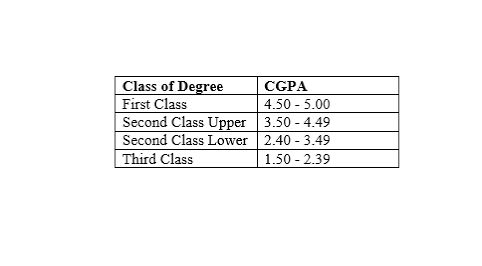
When Nigerian university students discuss academic performance, two terms that come up frequently are Second Class Upper (2:1) and Second Class Lower (2:2). Both are recognized honors degree classifications and are determined mainly by a student’s final Cumulative Grade Point Average (CGPA). Under the 5-point grading system commonly used by Nigerian universities, Second Class Upper…
-

If you are searching for the full list of polytechnics in Nigeria, this guide provides a clear directory of federal, state, and private polytechnics across the country. Nigeria has more than 200 polytechnic institutions across different ownership categories, although the exact number can change as new institutions receive approval or existing schools are upgraded or…
-

Choosing the best polytechnic in Nigeria can be challenging because there is no single official National Board for Technical Education (NBTE) ranking that declares one institution the best. Different education platforms assess Nigerian polytechnics using factors such as academic reputation, programme accreditation, facilities, graduate employability, JAMB applications, academic calendar stability and online visibility. However, some…
-

Nigeria has one of the biggest technical education systems in Africa, with over 200 approved polytechnics offering National Diploma (ND) and Higher National Diploma (HND) programmes. These institutions play a major role in developing skilled manpower in engineering, technology, science, business, and other practical fields. There is no official ranking of the “largest polytechnic in…
-

After completing the Joint Admissions and Matriculation Board (JAMB) Unified Tertiary Matriculation Examination (UTME), one of the most important steps for every candidate is checking their examination result. Knowing your JAMB score helps you understand your admission chances, choose suitable institutions, and prepare for the next stage of the admission process. JAMB usually releases UTME…